Ingredient name record
Urea
Evidence at a glance
Evidence coverage, not an efficacy or safety score.
Identity & coverage details
Official CosIng inventory context recorded; chemical identity and the complete current regulatory profile remain unverified; selected human studies available.
Recorded presence is not a safety rating, recommended dose or benefit claim.
Identity and formulation context
Names are indexed using case and whitespace normalization. Botanical, chemical and marketing identities have not been independently equated.
Both studies show why the complete moisturizer and vehicle matter. Short-term hydration measurements are distinct from disease treatment or long-term outcomes. Urea, Hydroxyethyl Urea and Diazolidinyl Urea are separate ingredient identities; evidence is not transferred between them.
Functions listed by CosIng
Inventory functions describe the ingredient entry, not a finished product’s effects.
How this inventory match is used
The European Commission’s CosIng inventory is informational. An entry is not permission to use an ingredient or a safety assessment. Listed functions describe the inventory entry; they do not establish a finished product’s effects. The match uses the exact ingredient name, with case and whitespace normalization.
UREA · Inventory identifiers
- Inventory record
- 38838 · Active
- CAS identifiers in this entry
- 57-13-6
- EC identifiers in this entry
- 200-315-5
Checked 2026-10-02 · Read the official CosIng entry
Human study context
Primary publications checked 2026-10-02. These are selected studies, not a systematic review, safety rating or instructions for using a product.
Comparison of Urea-Based Compounding Moisturizers and Similar Commercial Products on Skin Barrier Function: A Randomized Biometric Study
- Material tested
- 5% or 10% urea in compounded hydrophilic petrolatum, compared with corresponding commercial products, cream base and untreated sites.
- Study design
- Two concentration cohorts; randomized forearm-site allocation for compounded versus commercial preparations.
- Participants
- 30 dry-skin volunteers, aged 21–56 years.
- Concentration and schedule in the study
- Measurements one and four hours after a single application, then at 24 hours and one week of twice-daily application.
- What the authors reported
- Both urea-containing preparations improved measured barrier outcomes relative to controls. Some water-loss and hydration results favored commercial preparations, showing differences between vehicles.
What this does not establish
- Short forearm study; results do not isolate concentration from the complete formulation.
- The publication year is 2021, despite the later PubMed record identifier.
Depth-dependent hydration dynamics in human skin: Vehicle-controlled efficacy assessment of a functional 10% urea plus NMF moisturizer by near-infrared confocal spectroscopic imaging (KOSIM IR) and capacitance method complemented by volunteer perception
- Material tested
- 10% urea moisturizer enriched with natural-moisturizing-factor components, compared with vehicle.
- Study design
- Two vehicle-comparison clinical studies using corneometry and depth-resolved spectroscopy.
- Participants
- 42 participants in the lower-leg study and 27 in the forearm study.
- Concentration and schedule in the study
- Lower legs: one application, measurements after 30 minutes and 24 hours. Forearms: twice-daily study use for two weeks.
- What the authors reported
- The enriched moisturizer increased measured hydration relative to vehicle, including the water gradient to 15 micrometers below the surface. Participant ratings also favored it.
What this does not establish
- The humectant mixture does not isolate urea.
- Dry legs and forearms were assessed, not facial treatment or all skin conditions.
- Authors were Beiersdorf employees; Beiersdorf funded the study.
Still unverified
- This is a selected partial literature record, not a systematic review or a complete scientific profile.
- Cosmetic functions and jurisdiction-specific restrictions are not established by these research abstracts.
- Study preparations have not been matched to any Treatfolio product, batch, market or concentration.
- Chemical identity, the complete current regulatory profile and finished-product effects remain unverified.
Products with recorded occurrences
2 product records. Matches include reviewed amount annotations where available. Open a product to see the original source token, market and date.
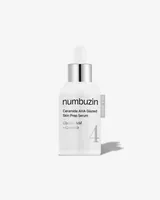 Photo unavailablenumbuzin · Face serumNo.4 Ceramide AHA Glazed Skin Prep Serum1 formula record · Observed 2026-08-15
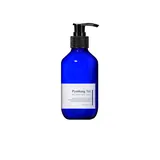 Photo unavailablePyunkang Yul · Face lotion / emulsionPyunkang Yul ATO Lotion Blue Label 350ml1 formula record · Observed 2026-08-20
Related product examples are shown above. Search all recorded products.